


A note about Growing Humans:
When Alis and I first created this space, it centered on how raising children raises us. That remains true. But what we’ve come to realize over the past year is that the deeper thread has always been about something more encompassing of all of life — how we grow as humans across roles, relationships, and thresholds.
Parenting was one doorway. Development has always been the room.
This piece lives inside that larger frame.
Lately, I’ve been sitting with a question that feels both developmental and deeply personal:
What happens when you see something… and cannot unsee it?
Not because something new has occurred. But because something that was always there has finally come into focus.
Over the past months, I’ve felt something shifting inside me.
Grief. Anger. Clarity. Tenderness. All braided together.
I’ve been grieving not only what is unfolding in the world, but what I failed to recognize before. The harm that existed while I was insulated by busyness, by complexity, by my own partial sight — and yes, by privilege.
Much has changed. And some of what feels newly urgent was always there — embedded in the structures around me, softened by the comfort I rarely had to question.
But, I can see it now. And once you see, you cannot return to innocence.
For years, much of my work has lived in what I think of as the developmental voice. Holding paradox. Inviting complexity. Asking, What might I be missing? Creating space for rough drafts — of ideas, of identity, of relationship.
That voice is still mine.
But recently, another voice has been rising — one that feels less patient and more precise.
I’ve wondered if this is fallback. If I’m becoming rigid. If I’m slipping into righteousness—a character I’ve known well.
But what I’m beginning to understand is that this isn’t a fracture. It’s a braid.
I still believe two things can be true at once.
But they are not always equal in what is at stake.
And when cruelty escalates, taking a stand is not a failure of development — it is its expression.
Patience without agency becomes avoidance. Agency without patience can erode the very humanity we’re trying to defend.
What I’m learning—painfully—is that the practice is not standing without consequence, rupture, or grief. Those are inevitable.
The work is to stand without contempt. To refuse cruelty without becoming cruel. To keep my conscience intact without flattening the world into simple enemies and allies.
I’ve also been grieving something else.
The people who may not understand this shift. The relationships that may strain under clearer boundaries. The losses that come when you choose not to stay quiet.
I feel this most acutely at home. As a parent. As a partner.
Seeing changes how I show up. It changes the conversations at the dinner table. It changes what I model about courage and consequence. It changes how I talk about power…and how I use my own.
Because once you see harm, neutrality is no longer neutral.
The question becomes:
What kind of adult do I want my children to watch me become? One who preserves comfort? Or one who preserves conscience?
What kind of partner do I want to be in this moment? One who retreats into abstraction? Or one who stands, even when standing costs something?
I cannot lose myself to preserve belonging. But I also cannot abandon others — especially those who are watching, learning, calibrating their own sense of agency by how I inhabit mine.
This is the braid. Not abandoning self. Not abandoning others. Not abandoning the possibility that we can grow into something braver together.
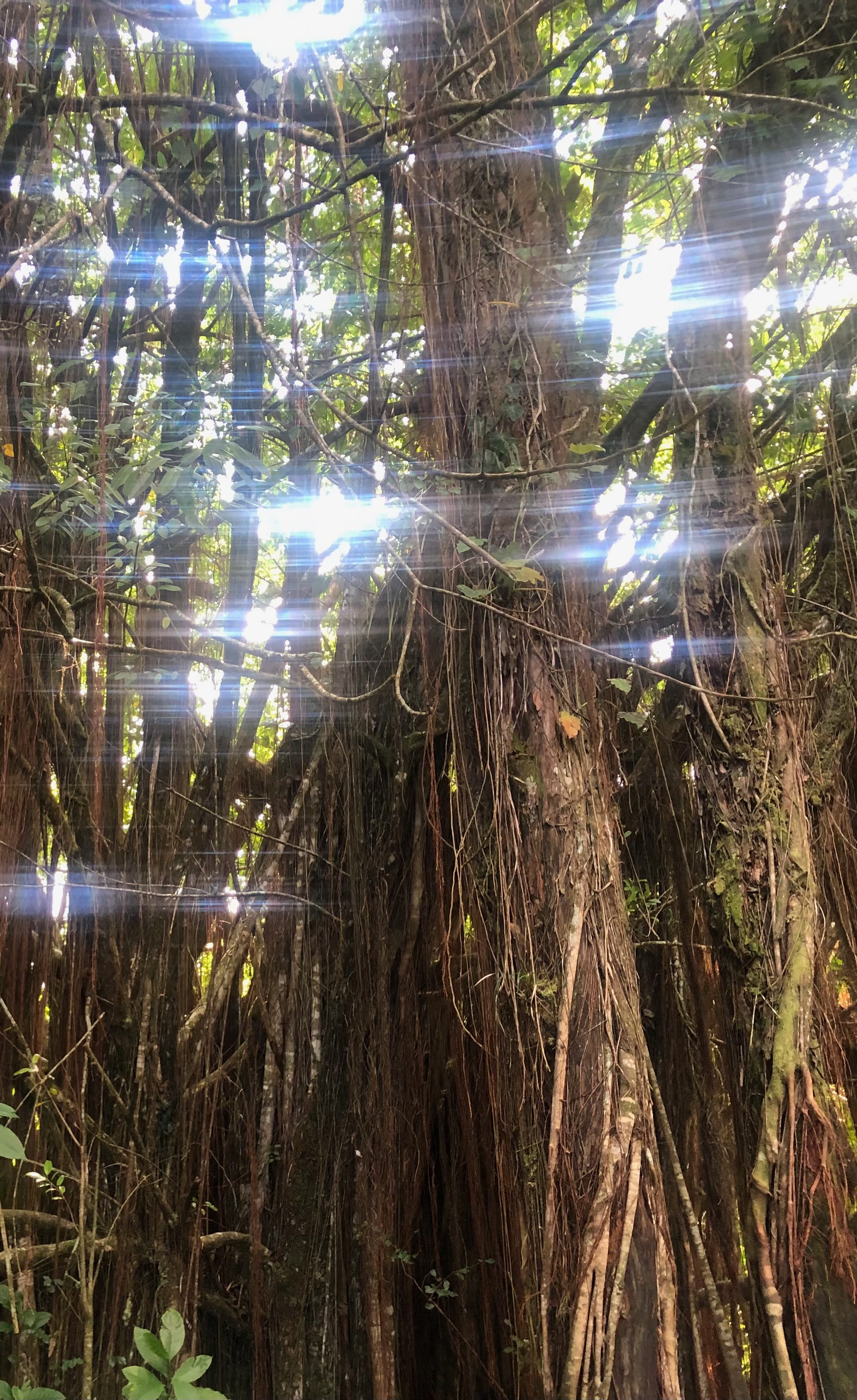
Recently, my friend, Craig, wrote on his Book of Forgotten Words substack about the word respair — to reclaim hope as an act of will.
That word feels right in this moment. Because this kind of seeing hurts. It burns off illusion. It strains relationships. It destabilizes identity.
But it also clarifies. And clarity, when paired with conscience, is not cynicism. It is the beginning of respair. Not shallow optimism. But a disciplined refusal to give up on one another…a refusal to give up on one’s self.
If you’ve been feeling something similar — grief braided with anger, clarity braided with fear, agency braided with loss — you are not unraveling.
You may be integrating. And integration rarely feels gentle.
It feels like tension. It feels like choosing. It feels like standing where you once would have shrunk. It feels like becoming someone who cannot unsee, and refuses to abandon either self or hope in the process.
I don’t know exactly what this season will require. But I know this: I would rather lose comfort than lose coherence. Because development and dignity were never separate projects. They were always the same work.
And perhaps this is what growing as humans looks like in a moment like this — the courage to see clearly and live in alignment with what we now know.

Dive deeper
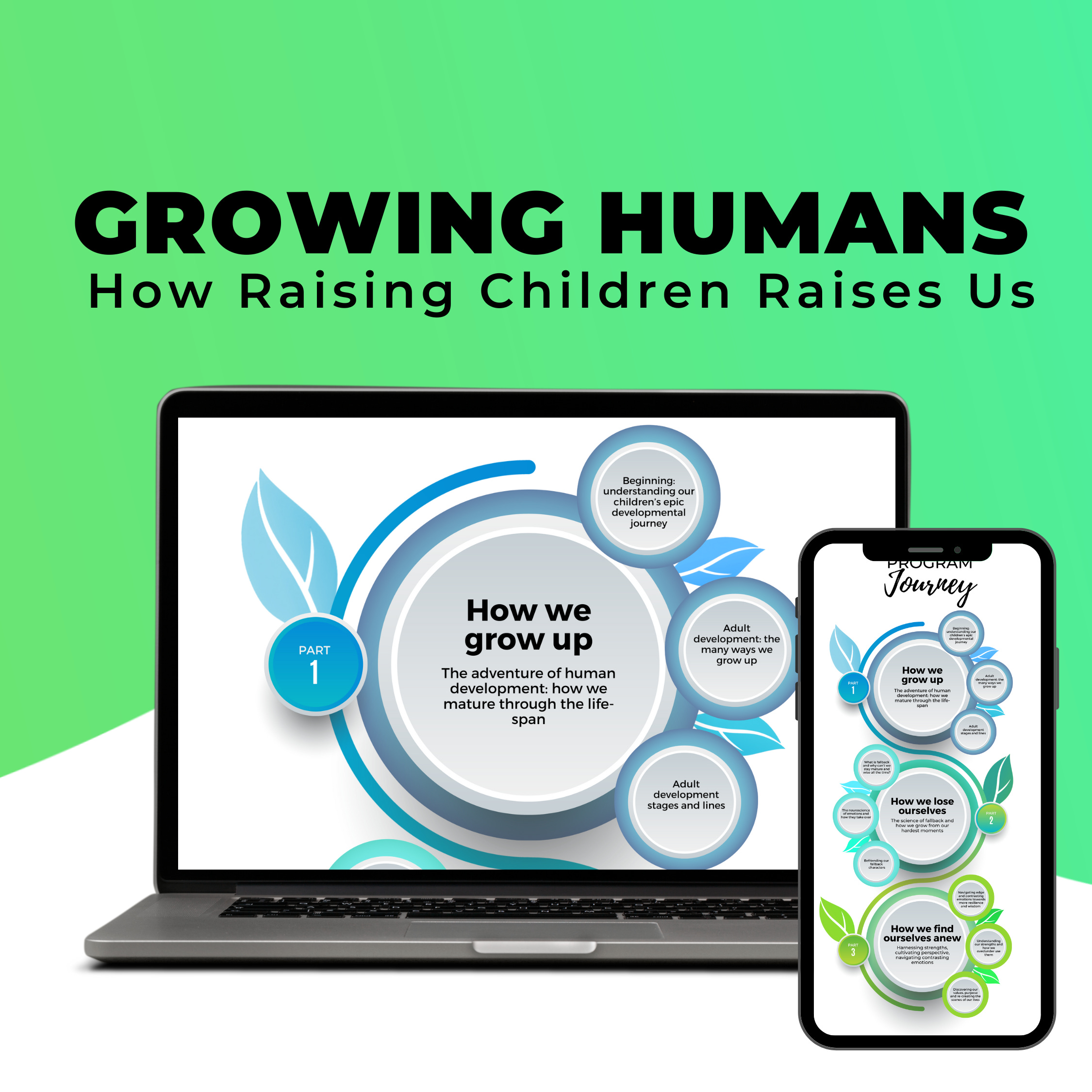
Join our in-depth, self-led developmental course for adults who raise and educate children - Growing Humans: How Raising Children Raises Us. Head over to the program page to learn more.
Spread the word…
If you’d like to see this community grow, we hope you share this article with other parents, caregivers, educators, and humans who could benefit from the reflection.